

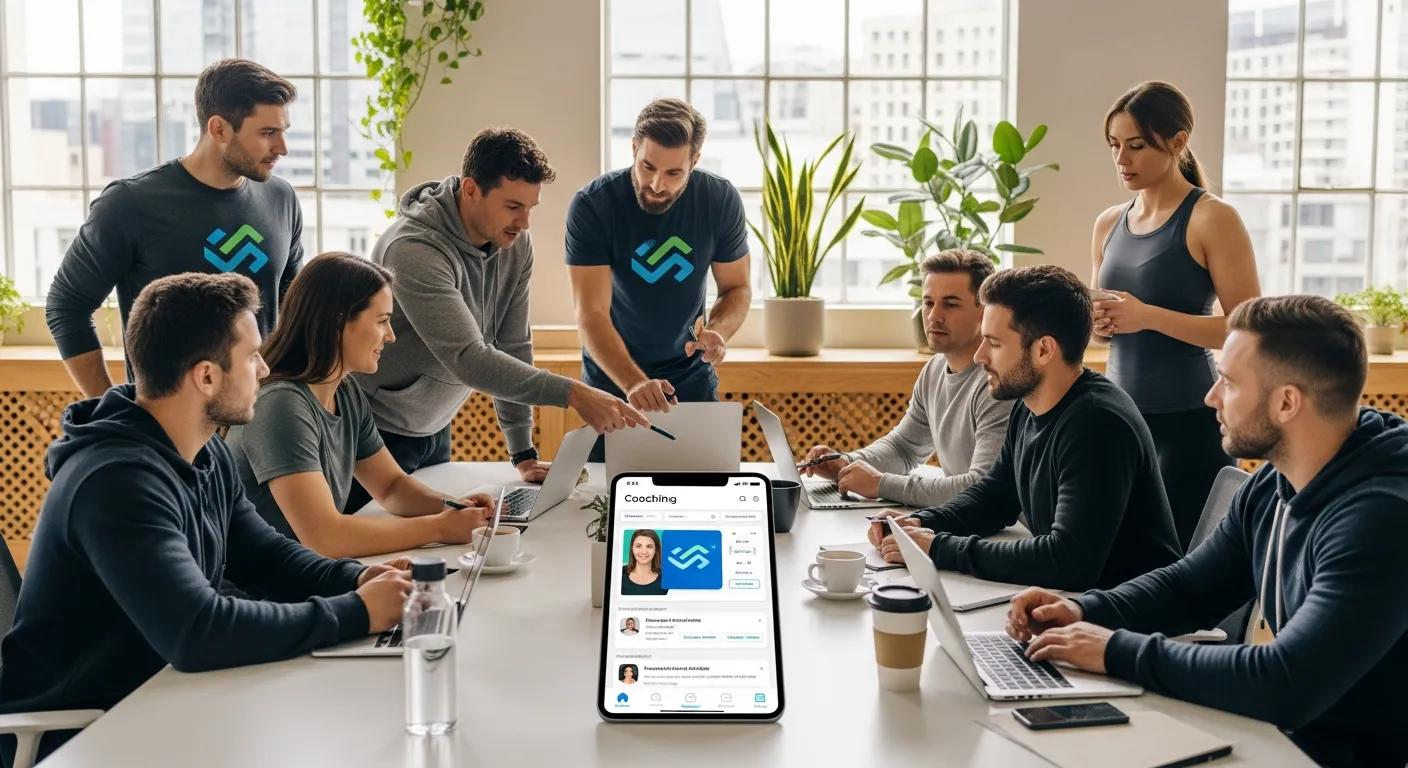
As the coaching industry shifts, demand for flexible, branded tech keeps rising. A white label coaching app lets coaches manage clients, deliver programs, and scale with consistency. This guide breaks down the features that matter most in 2026 — from branding and client management to program delivery, customization, operations, integrations, and AI — so you can choose an app that helps you run smarter and grow faster.
Why Choose a Custom Branded Coaching App for Your Business?
A custom branded coaching app gives your business a professional, cohesive touch that clients notice. Beyond aesthetics, it helps you build trust, increase engagement, and stand out in a crowded market.
How Does Branding Elevate Your Coaching Professional Image?
Your brand shapes first impressions. A polished app with your logo, colors, and voice signals reliability and care — qualities clients look for when committing to coaching. Strong branding also reinforces community and keeps clients feeling connected to your programs.
What Client Engagement Benefits Does a White Label App Provide?

White label apps increase engagement by making interactions personal and frictionless. Push notifications, tailored content, in-app messaging, and clear progress feedback all encourage clients to stay active. When the experience feels made for them, clients are more likely to stick with your programs.
What Core Client Management Features Should a White Label Coaching App Include?
Choose an app that simplifies everyday client work. Core tools should include robust client profiles, easy scheduling, and reliable communication features to keep your practice organized and responsive.
How Do Client Profiles, Scheduling, and Communication Enhance Coaching Efficiency?
Client profiles store goals, preferences, and history so you can personalize plans quickly. Built-in scheduling reduces no-shows and admin back-and-forth. And integrated communication tools keep messages, check-ins, and feedback in one place — saving time and improving the client experience.
What Role Does Progress Tracking Play in Client Accountability?
Progress tracking turns intentions into measurable steps. When clients can see improvements and milestones, they feel motivated and accountable. Regular check-ins and visible metrics help you adjust programming and celebrate wins, which boosts long-term adherence.
Which Program Delivery Tools Are Vital in a White Label Coaching Platform?

Program delivery should be flexible and comprehensive. Look for workout builders, nutrition tracking, habit tools, and a content library so clients have everything they need to follow your programs and learn as they go.
How Do Workout Builders and Nutrition Tracking Support Personalized Coaching?
Workout builders let you assemble tailored plans quickly and reuse templates across clients. Nutrition tracking gives context to training and helps clients align habits with goals. Together they support a truly individualized approach that improves outcomes.
What Are the Advantages of Habit Coaching and Content Libraries?
Habit coaching focuses on sustainable change rather than quick fixes. Content libraries supply the education and motivation clients need between sessions — articles, videos, and guides that reinforce your coaching and keep clients engaged long term.
How Can Branding and Customization Differentiate Your Coaching App?
Customization turns a generic tool into an extension of your business. The more you can adapt the app — visually and functionally — the more seamless the client experience becomes.
What Customization Options Should You Expect for Logos and Color Schemes?
Your white label app should let you add logos, set color palettes, and tailor in-app language so the product feels like your own. Those details strengthen recognition and deliver a consistent experience from marketing to daily use.
How Does App Store Presence Impact Your Brand Visibility?
An app that appears under your brand in app stores extends visibility and credibility. Optimizing store listings, descriptions, and visuals makes it easier for potential clients to discover and trust your offering.
What Business Operations Features Drive Growth in White Label Coaching Apps?
To scale, your app needs solid back‑end tools: payments, reporting, and automation that reduce manual work and reveal business trends.
How Do Payments, Reporting, and Automation Streamline Your Coaching Business?
Integrated payments simplify billing and reduce friction for clients. Reporting dashboards surface revenue, retention, and engagement metrics so you can make informed decisions. Automation handles routine tasks like onboarding, reminders, and billing — freeing you to focus on coaching.
What Marketplace and Multi-Coach Support Features Facilitate Scalability?
Marketplace features let you offer add‑on products, digital plans, or classes to diversify income. Multi-coach support lets you add staff or partners, delegate programs, and grow service capacity without sacrificing consistency.
How Do Integrations and AI Enhance the Functionality of White Label Coaching Apps?
Integrations and AI add intelligence and convenience — turning raw data into usable insights and automating personalization at scale.
Which Wearable and Third-Party App Integrations Are Essential?
Syncing with wearables and nutrition or activity apps gives you continuous data — sleep, steps, heart rate, meals — so programs reflect real behavior. Those signals help you fine‑tune plans and spot trends you’d otherwise miss.
What Benefits Does AI-Powered Coaching, Like Habby AI, Offer?
AI tools like Habby AI analyze patterns and suggest tailored adjustments, content, or nudges based on client data. Used well, AI can increase engagement, improve personalization, and free coaches from repetitive tasks while preserving your coaching judgment.
| Feature | Description | Benefit |
|---|---|---|
| Client Profiles | Centralize goals, history, and preferences | Deliver truly personalized coaching |
| Scheduling Tools | Book and manage sessions with ease | Fewer missed sessions and less admin |
| Progress Tracking | Record milestones and metrics over time | Higher client accountability and motivation |
This table highlights essential features that improve client management and operational efficiency — the basics you need for consistent, scalable coaching.
| Program Delivery Tool | Functionality | Impact |
|---|---|---|
| Workout Builders | Assemble and deliver tailored training plans | More relevant, repeatable programs |
| Nutrition Tracking | Capture dietary habits and trends | Better alignment between diet and goals |
| Content Libraries | Host lessons, videos, and guides | Boosted client education and engagement |
These program tools work together to create a rounded, high-value experience that supports client success.
Choosing the right white label coaching app in 2026 means evaluating features that match your business goals: strong branding, efficient client management, flexible program delivery, meaningful customization, reliable operations, and smart integrations. Pick a platform that lets you deliver consistent, personalized coaching at scale and you’ll see engagement — and growth — follow.
Frequently Asked Questions
What are the key benefits of using AI in a white label coaching app?
AI brings personalization and efficiency. It analyzes client data to suggest program tweaks, content, and nudges, and it automates routine tasks like check-ins or recommendations. That frees coaches to focus on high-value coaching while delivering tailored experiences at scale.
How can a white label coaching app improve client retention rates?
Retention improves when the experience feels personal and consistent. Features like progress tracking, custom content, and direct messaging keep clients engaged and accountable. Regular touchpoints and visible progress make clients more likely to stay with your program.
What should coaches consider when choosing a white label app provider?
Evaluate customization, support, and integrations. Make sure the provider lets you brand the app, offers responsive customer support, and connects with the tools clients already use. Also check reporting and automation capabilities so the app supports growth, not just day‑to‑day tasks.
How do marketplace features benefit coaches using a white label app?
Marketplace features let you sell services, plans, or products directly through the app, creating new revenue streams and making it easier for clients to buy more from you. They expand your offering without adding manual sales processes.
What role does user feedback play in improving a coaching app?
User feedback is essential. Gathering and acting on client input reveals usability issues, content gaps, and feature ideas. Iterating based on feedback keeps the app aligned with client needs and strengthens long-term satisfaction.
How can coaches leverage data analytics from their app?
Use analytics to identify engagement patterns, retention drivers, and program outcomes. Data helps you refine offerings, target marketing, and personalize coaching. In short, analytics turn daily interactions into actionable business intelligence.
Conclusion
The right white label coaching app can transform how you run and grow your business — improving client engagement, simplifying operations, and unlocking new revenue channels. Focus on branding, core client tools, flexible program delivery, and integrations to build a platform that reflects your business and supports scale. Ready to make your app your brand’s home? Explore our customizable coaching app solutions today.

