Frequently Asked Questions
How do personal trainers create workout plans?
Personal trainers create workout plans by assessing clients' fitness levels, goals, and preferences, then designing customized exercise routines to help them achieve their objectives.
How do you structure a personal training program?
Structuring a personal training program involves assessing the client's goals, fitness level, and limitations, then designing a customized plan with progressive exercises, nutrition guidance, and ongoing evaluation to help the client achieve their desired outcomes.
How to market yourself as a personal trainer?
Effectively marketing yourself as a personal trainer involves leveraging social media, building an online presence, offering free consultations, and networking with potential clients to showcase your expertise and build a strong client base.
What key components are in workout plans?
Workout plans typically include key components such as cardiovascular exercises, strength training, flexibility, and rest and recovery periods to ensure a balanced and effective exercise routine.
How to assess client fitness levels?
Assessing client fitness levels involves evaluating their physical capabilities, such as cardiovascular endurance, strength, flexibility, and body composition, to develop personalized training programs.
What is the ideal workout plan duration?
The ideal workout plan duration typically ranges from 4 to 12 weeks, depending on the individual's fitness level, goals, and progress.
How to customize programs for clients?
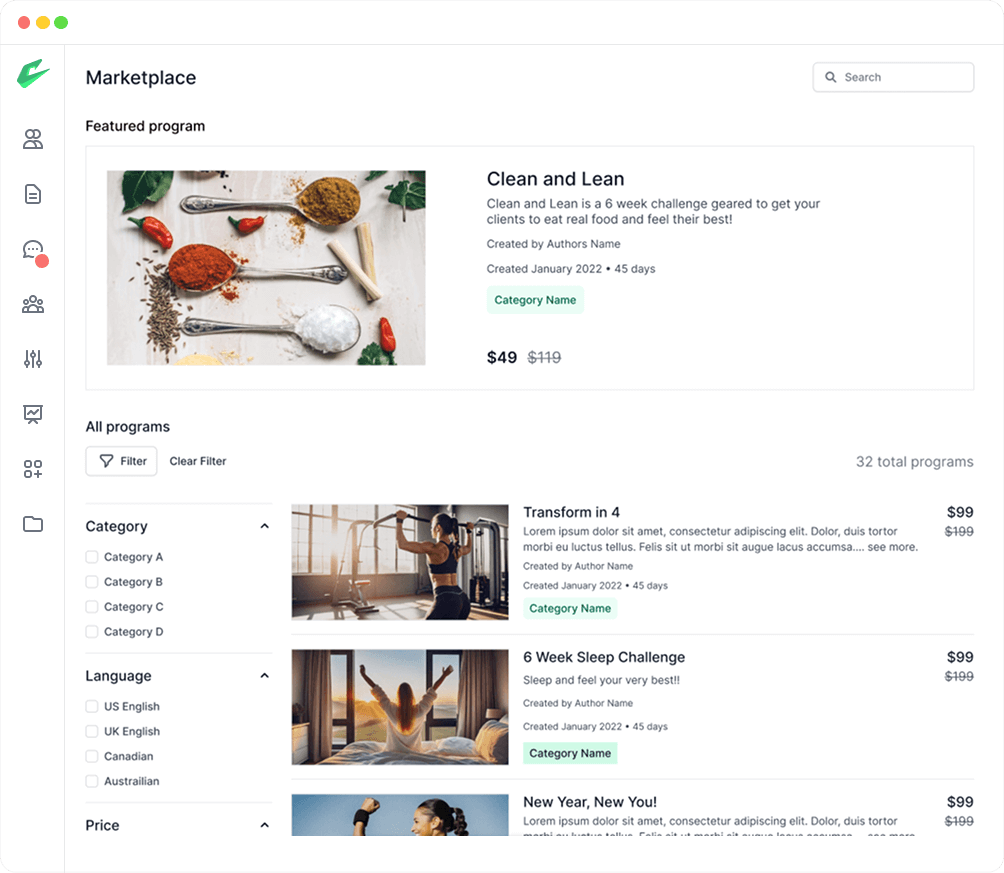
The Coach Catalyst Marketplace offers pre-developed coaching programs that can be easily customized to meet the specific needs of each client. Users can personalize program content, schedules, and preferences to deliver a tailored experience.
What are common mistakes in program design?
Common mistakes in program design include lack of individualization, insufficient progression, and inadequate recovery periods, which can lead to suboptimal results and potential injury.
How to integrate nutrition into training?
Integrating nutrition into training involves creating a balanced diet that supports athletic performance and recovery. This includes timing nutrient intake around workouts, adjusting macronutrient ratios, and ensuring proper hydration to maximize the benefits of your training regimen.
What tools help in creating workout plans?
The tools that help in creating workout plans include pre-designed coaching programs, templates, and integrated platforms like Coach Catalyst that streamline the process of developing customized workout and nutrition plans for coaches and their clients.
How to track client progress effectively?
Effectively tracking client progress involves setting clear goals, regularly monitoring performance metrics, and providing timely feedback to clients to ensure they stay motivated and on track towards their objectives.
What strategies attract new personal training clients?
Strategies to attract new personal training clients include effective marketing, building an online presence, leveraging referrals, hosting free trials, and providing value-added services to potential clients.
How to build a personal trainer brand?
Building a personal trainer brand involves developing a unique identity, establishing a strong online presence, and providing exceptional client experiences to stand out in the competitive fitness industry.
What online platforms support personal trainers?
Online platforms that support personal trainers include digital fitness platforms, virtual training apps, and online coaching marketplaces, which enable trainers to reach clients remotely and manage their coaching business.
How often should clients update workout plans?
Clients should update their workout plans regularly, typically every 4-6 weeks, to ensure continued progress and adaptation to their fitness goals.
What is the role of feedback in training?
Feedback plays a crucial role in training, as it provides valuable information for improving performance and identifying areas for growth.
How to handle client objections in training?
Handling client objections in training involves active listening, addressing concerns, and offering alternative solutions to find a mutually agreeable approach that meets their needs.
What trends influence personal training marketing?
Personal training marketing is influenced by trends such as the growing demand for online and virtual training, the rise of niche and specialty fitness programs, and the increasing emphasis on holistic wellness beyond just physical fitness.
How to create engaging social media content?
Creating engaging social media content involves a combination of compelling visuals, authentic storytelling, and timely, relevant posts that resonate with your audience.
What niche markets can personal trainers target?
Personal trainers can target a variety of niche markets, including seniors, athletes, weight-loss clients, pre-/post-natal clients, and individuals with specific health conditions or disabilities.
How to network with other fitness professionals?
Networking with other fitness professionals can be achieved by attending industry events, joining professional associations, and engaging on social media platforms to connect and collaborate with peers.
What certifications enhance credibility as a trainer?
Certifications that enhance credibility as a trainer include industry-recognized accreditations such as NASM, ACSM, NSCA, and ISSA, which demonstrate expertise and commitment to professional development in the field of fitness training.
How to use testimonials for client retention?
Using testimonials to retain clients involves showcasing positive client experiences, building trust, and highlighting the value of your coaching services, which can encourage continued engagement and referrals.
What are successful pricing strategies for trainers?
Successful pricing strategies for trainers include offering packages, value-based pricing, and tiered pricing models that account for the trainer's expertise, client demographics, and the local market.
How to establish a referral program?
Establishing a referral program involves creating incentives for existing customers to recommend your services to their network, which can be an effective way to acquire new clients.
What workshops benefit personal trainers?
Workshops that benefit personal trainers often focus on improving training techniques, client communication, and business management skills to enhance the effectiveness and efficiency of their coaching services.
How to balance multiple clients’ needs?
Balancing multiple clients' needs requires effective time management, clear communication, and prioritizing tasks based on client deadlines and requirements. Develop a structured workflow to ensure all clients receive the necessary attention and support.
What are crucial qualities of successful trainers?
Crucial qualities of successful trainers include expertise, empathy, motivation, and the ability to tailor programs to individual client needs.
How to develop rapport with clients?
Developing rapport with clients involves active listening, empathy, and building trust through personalized interactions. This helps clients feel understood and valued, leading to stronger client-coach relationships.
What metrics measure personal training success?
The key metrics to measure personal training success include client progress, client satisfaction, retention rates, and achievement of client goals.